Website cost calculator & pricing guide 2026
10 min read
November 27, 2025

Landing page
Ognjen Marinkovic
8 min read
November 22, 2025
Landing page prices in 2026 span from $19 monthly for DIY builders to $28,000 for full-service agencies. Freelancers charge $1,000-$10,000 for custom design. Designow's retainer delivers unlimited landing pages for $2,999/month with pause-anytime flexibility.
Quick breakdown:
Timeline: DIY (hours-days), Freelancers (2-6 weeks), Agencies (6-12 weeks), Retainers (48-hour updates)
Your choice depends on: Timeline urgency, budget flexibility, control needs, and how many pages you'll need over time.
How much does a landing page cost? If you're planning to run paid ads or launch a new product, this question is keeping you up at night. And for good reason: the wrong landing page burns your ad budget faster than you can say "conversion rate."
Here's what makes this tricky: prices range from $19/month to $28,000 for essentially the same thing (a single web page). Without clear information, you're either overpaying for agency bloat or underpaying for templates that convert like a broken vending machine.
Think of your landing page as a digital salesperson who never sleeps. Would you hire an unqualified salesperson to handle your best leads? Probably not. Yet many businesses do exactly that with cheap landing pages that look pretty but don't convert.
In this guide, you'll discover:
Not sure which option fits your needs?
How much does a landing page cost? If you're planning to run paid ads or launch a new product, this question is keeping you up at night. And for good reason: the wrong landing page burns your ad budget faster than you can say "conversion rate."
Here's what makes this tricky: prices range from $19/month to $28,000 for essentially the same thing (a single web page). Without clear information, you're either overpaying for agency bloat or underpaying for templates that convert like a broken vending machine.
Think of your landing page as a digital salesperson who never sleeps. Would you hire an unqualified salesperson to handle your best leads? Probably not. Yet many businesses do exactly that with cheap landing pages that look pretty but don't convert.
In this guide, you'll discover:
Not sure which option fits your needs?
Landing page costs range from $19 monthly to $28,000+ because each option solves different problems.
DIY builders are fast and cheap but use templates that everyone else uses too. Freelancers offer custom design tailored to your brand, but quality varies wildly: you might get a gem or a disaster. Agencies bring full teams with strategy and polish, but they take longer and cost significantly more. Retainer services provide ongoing design work without the commitment of hiring full-time staff.
Your best choice depends on three factors: how quickly you need to launch, how much budget flexibility you have, and how much control you need over the design process.
Self-service platforms like Webflow, Framer, Wix, Squarespace, and Carrd enable template-based landing pages without coding knowledge.
Cost breakdown: Basic plans run $19-$50/month, professional plans with advanced features cost $100-$399/month, premium templates add $0-$100 one-time, bringing total monthly investment to $19-$399.
DIY builders work best for: Quick tests, solo founders, and people without design experience. You can launch in hours or days with low monthly costs and easy updates.
The reality check: Templates look generic. Everyone uses the same designs. Customization is limited. And you do all the work yourself: expect to invest 20-50 hours learning the platform and building your page.
This path works when you have time but not budget, and you don't require custom design. Pages needing brand differentiation or high-volume conversion rates quickly outgrow template constraints.
Pro tip: If you go the DIY route, invest $50-100 in a premium template. The free ones scream "budget startup" and hurt credibility more than they help.

Independent designers provide custom landing pages on moderate budgets. But here's what most people don't tell you: freelancer quality varies more than any other option.
Pricing by experience level: Junior freelancers charge $1,000-$3,000 (they're still learning, deliver slower, and may need extra revisions). Mid-level designers command $3,000-$6,000 (reliable work, proven portfolio, good communication). Senior freelancers cost $6,000-$10,000+ (strategic thinking, conversion optimization expertise, premium results).
Timeline: 2-6 weeks depending on complexity and revision requirements.
Standard deliverables include: Custom Figma design, 2-3 revision rounds, desktop plus mobile mockups, and sometimes Webflow development (ask upfront, as this isn't always included).
Wondering why the price range is so wide? You're paying for years of experience in conversion optimization, not just pixels on a screen.
Freelancers cost 40-60% less than agencies while giving you direct communication with the actual designer. You get brand-specific custom work with faster execution than large teams require.
Quality varies dramatically between designers. They juggle multiple clients, so availability can be limited. Strategy and copywriting usually aren't included, and since one person does everything, you're stuck if they disappear mid-project.
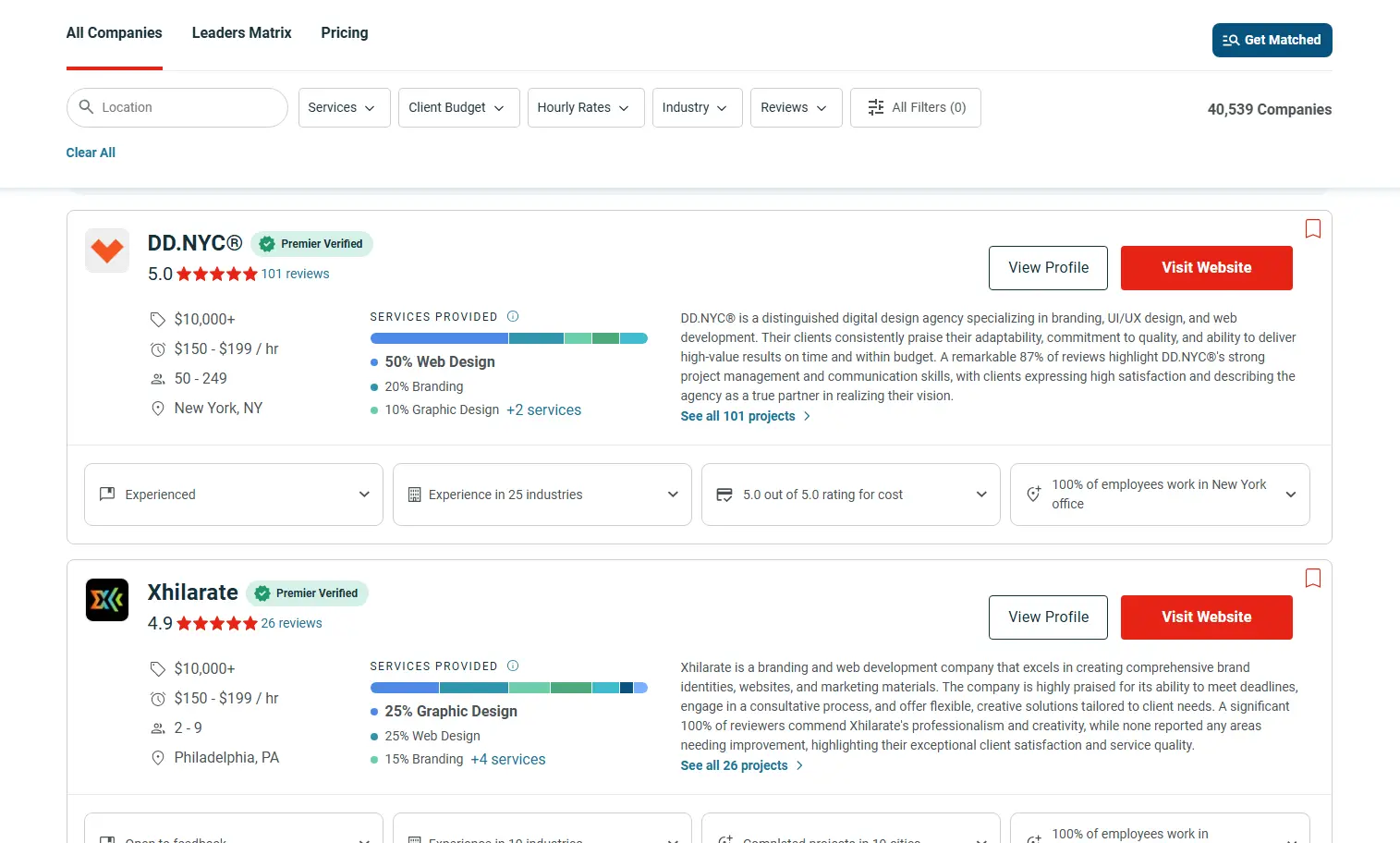
Agency teams bring multiple specialists, but they demand premium pricing and extended timelines. Here's the honest breakdown:
Pricing by agency size: Small agencies charge $5,000-$10,000 (small team, basic process). Mid-size firms run $10,000-$20,000 (established processes, account managers). Large agencies command $20,000-$28,000+ (full teams, extensive strategy, brand reputation).
Minimum timeline: 6-12 weeks (sometimes longer with revisions and approvals).
Full-service packages typically include: Strategy workshops and discovery sessions, professional copywriting, custom design with multiple concepts, complete development and testing, multiple revision rounds (usually 3-5), plus dedicated account managers and project coordinators.
Think of agencies like hiring a construction firm to build a shed. Yes, they'll build an amazing shed. But you're paying for the foreman, the project manager, the safety inspector, and the office overhead (not just the carpenter).
The reality: Agencies cost the most, take the longest, and add management layers between you and the actual designers. You pay for meetings and overhead, not just design work.
This is overkill for most startups. Agencies make sense for big companies with big budgets who need the safety of established processes and blame-free decisions ("We hired the best agency, so it's not our fault if it fails").
Agencies make sense for big companies with big budgets. Why SaaS startups overpay for their website explains common budget traps.

Flat monthly fees cover on-demand landing page design and development throughout 2026. This model suits startups shipping rapidly with ongoing landing page requirements.
Designow's monthly retainer: $2,999 monthly flat rate.
What's included: Unlimited landing page requests, updates every 48 hours, design + Webflow development, motion graphics and animations, SEO optimization, and pause-or-cancel-anytime flexibility.
How it works: Submit requests via Notion, receive Figma designs, provide feedback, iterate together, then launch Webflow builds. Simple as that.
Need three landing pages this month? Covered. Need ten variations for A/B testing? Also covered. One flat fee handles unlimited requests.
You get predictable monthly costs with no hourly tracking or surprise invoices. Fast 48-hour turnaround beats waiting weeks with freelancers or months with agencies. Complete design and development means no coordination between multiple people. Contract-free flexibility lets you pause when you don't need design work. Plus you get direct founder access (no account managers or project coordinators slowing things down).
The catch: Monthly commitment exists (though pausing is available). One active task processes at a time: you can't submit 10 pages and get them all back in 48 hours.
Retainer services beat agencies on speed and freelancers on availability. If you ship landing pages regularly (product launches, campaign variations, A/B tests), this model wins hands down.
Understanding these factors helps you negotiate better and avoid overpaying:
Simple hero sections with forms cost less. Custom animations, video backgrounds, and interactive elements increase costs substantially.
Price impact: Basic pages start around $1,000 while sophisticated interactions reach $10,000+.
Templates cost $0-$100 for pre-designed layouts with limited modifications. Custom design requires $1,000-$10,000+ for brand-specific work built from scratch.
The tradeoff: Custom work delivers unique positioning while templates provide speed. Think of templates as renting an apartment (fast and cheap). Custom is buying land and building (slower but exactly what you want).
Landing pages live or die on copy quality. Great design with terrible copy converts at 0.5%. Decent design with great copy converts at 5-10%.
Price impact: Professional copywriters add $500-$2,000 to project costs. Without writing skills, this investment typically pays for itself through improved conversion rates within weeks.
Design-only packages cost less but require separate development resources. Design plus Webflow builds add $500-$3,000.
Why combined is better: Complete packages eliminate coordination overhead between designers and developers. One person handles both = fewer miscommunications and faster delivery.
Most packages include 2-3 revision rounds within base pricing. Additional rounds cost $200-$500 each.
Pro tip: Clearly defined requirements reduce revision needs and total costs. Spend an extra hour writing a detailed brief, save $1,000 in extra revisions.
Rush delivery demands premium pricing. Three-day turnarounds add 20-50% rush fees. Standard timelines of 2-4 weeks eliminate rush charges while ensuring quality work.
Many people confuse these two. Here's the clear distinction:
Use landing pages when you're testing new products or offers, running paid advertising campaigns, launching rapidly (days, not months), or focusing on single conversion goals. Landing pages provide speed and focus without multi-page website complexity.
Full websites suit businesses needing blogs and content marketing, multiple service pages, about and team pages, resources sections, or comprehensive online presences.
Pro tip: Start with landing page MVPs. Add pages later as you validate market fit. Most startups waste money building 20-page websites before proving anyone wants their product.
Not sure which path to take? Here's your decision framework:
Go DIY if you're testing ideas with budgets under $500, possess design skills (or patience to learn), accept template appearances, and have 20-100 hours to invest in learning and building. DIY suits rapid experimentation without custom requirements.
Hire freelancers when you need custom design with a $1,000-$10,000 budget, have one-time projects you can manage independently, can wait 2-6 weeks for delivery, and are willing to vet designers carefully. Freelancers provide affordable custom work for defined requirements. Quality varies significantly, so review portfolios carefully and check references.
Go with agencies when you have full strategy requirements with $10,000+ budgets, flexible 6+ month timelines, need for enterprise-level processes and documentation, and value blame-free decisions (hiring "the best" agency). Agencies deliver comprehensive services including research, strategy, copywriting, and ongoing support. This represents overkill for most startups.
Use one-off design when you need a single landing page without ongoing requirements, have a budget of $1,499-$2,499 one-time, can wait 3-4 weeks for completion, and want complete ownership with no recurring costs. This suits businesses needing occasional pages without recurring design needs.
Pick retainers when you ship landing pages regularly (multiple per month), need unlimited requests with 48-hour speed, want predictable monthly costs, need flexibility to pause in slow months, and prefer direct founder access over account managers. At $2,999 monthly, you get unlimited work with pause-anytime flexibility. This beats hiring junior designers ($60k+ annually) and outpaces any agency.
Most startups don't need agencies: they need speed.
One landing page? Our one-off plans start at $1,499 (design only) or $2,499 (design plus Webflow build), completed in 2-4 weeks.
Multiple landing pages or ongoing needs? A Designow monthly retainer delivers unlimited landing pages for $2,999 monthly including unlimited requests, design plus Webflow builds, 48-hour updates, direct founder access, and pause-anytime flexibility.
This costs less than one junior designer while moving faster than any agency.
Landing page prices in 2026 range from DIY builders ($19-$399 monthly), freelancers ($1,000-$10,000), to agencies ($5,000-$28,000). Smarter options include one-off plans ($1,499-$2,499) or unlimited retainers ($2,999 monthly).
Your decision framework: For testing and tight budgets, DIY builders work (but expect 20-50 hours of your time). Need a one-time custom page? Hire a mid-level freelancer ($3,000-$6,000) or use a one-off service. Shipping multiple pages regularly? Retainer services provide best ROI and speed. Enterprise with big budgets? Agencies deliver comprehensive service (but expect 6+ month timelines).
Remember: your landing page is a digital salesperson. Hire accordingly. A great landing page pays for itself within days through improved conversion rates.


$1,000-$3,000 for custom design. DIY builders run $19-$399 monthly. Simple pages with basic hero sections and forms start at lower price ranges. Complex pages with animations and custom interactions reach higher costs.
Templates work for testing and validation. Custom design wins for conversion optimization and brand differentiation. If conversion rates matter, particularly for paid advertising, invest in custom design. Templates suffice for initial testing.
$5,000-$28,000 depending on agency size and scope. Small agencies start around $5,000. Large agencies with full strategy and multiple specialists charge $20,000-$28,000. Most startups overpay for agency overhead.
If you're not a writer, yes. Effective copy increases conversion rates 2-5x. Professional copywriters cost $500-$2,000 but typically generate positive ROI through improved conversions. Copy matters more than design for landing page success.
Webflow (our choice). Fast loading, SEO-ready, and no code needed after initial setup. Visual editor enables easy updates. Strong hosting infrastructure ensures reliability. Extensive template marketplace provides starting points.
Get everything you need in one place, from branding to Webflow. Fast, flexible, and built for startups.